
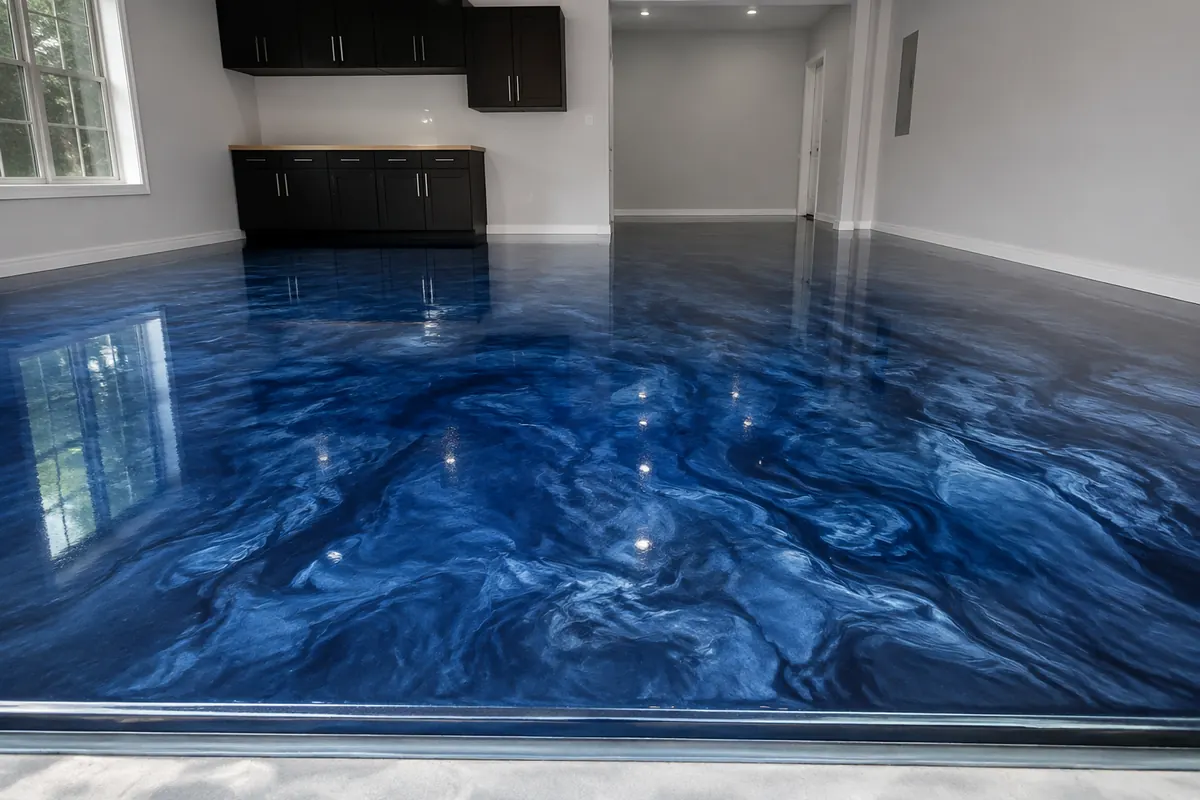
 A garage does not always stay a simple parking space. Some become detailing bays, hobby rooms, home gyms, or display areas where the floor becomes part of the design. Homeowners considering metallic epoxy flooring should think about how much visual impact they want, how the room is used, and whether the existing slab is suitable for a highly decorative finish.
Metallic systems create movement, depth, and variation rather than a flat, repeatable pattern. That character can make a converted garage feel more like a finished interior, but it also makes preparation, lighting, and long-term care especially important.
Start With the Way the Garage Is Used
A showroom-style garage has different priorities from one that sees constant parking, heavy storage, jacks, and workshop debris. Decorative floors still need to match the actual workload rather than a sample photo.
For garages where faster return to service and UV stability are priorities, polyaspartic flooring may be considered as part of the system. Polyaspartic products cure more quickly than traditional epoxy and can be used where sunlight reaches the floor, while metallic epoxy is generally best treated as an indoor decorative finish.
Inspect the Slab Before Choosing the Pattern
A metallic floor will not hide every defect. Cracks, low spots, previous repairs, oil contamination, and old coatings should be identified before the decorative layer is planned.
Mechanical grinding can remove weak material and create a suitable surface profile. Repairs should then be completed so the resin is not being asked to bridge defects or disguise uneven concrete that should have been corrected first.
Understand Why Metallic Floors Are Never Identical
Metallic pigment moves through the resin while the floor is still wet. As the coating flows and cures, it can form veins, clouds, cells, and color transitions that are unique to that installation.
That means a sample should be treated as a color and style reference, not as an exact map of the finished floor. Clients wanting a repeatable pattern may prefer a flake or solid-color system.
Use Lighting as Part of the Design
Metallic floors can look dramatically different under daylight, cool LEDs, warm task lighting, or spotlights. Reflections can add depth, but they can also make dust, scratches, or surface irregularities easier to notice.
Samples should be viewed inside the actual garage when possible. Cabinets, wall colors, vehicles, and ceiling lighting all influence whether the finish feels balanced or too visually busy.
Choose the Protective Layer Around Daily Use
The decorative metallic layer creates the visual effect, but the protective top layer takes the wear from shoes, tires, furniture, and routine cleaning. It should be selected for the room’s actual exposure rather than for gloss alone.
A garage that opens to strong afternoon sun may need a UV-stable protective coat. A workshop may place more emphasis on abrasion and chemical resistance, while a display garage may prioritize clarity and sheen.
Think Carefully About Texture
High-gloss decorative floors are often associated with smooth finishes, but traction should still be considered where water or automotive fluids may reach the surface.
Too much texture can interfere with the visual depth of a metallic system and make cleaning harder. Too little can be impractical in a wet-use area. The right balance depends on how the room is used and how often it is cleaned.
Plan the Installation Around Cure Time
The garage needs to be cleared before grinding, repairs, and coating begin. Vehicles, storage, and equipment should remain off the surface until the system has reached the required stage of cure.
Fast-curing materials can shorten downtime, but the schedule should still allow enough time for preparation and each coating layer. A quick return to service only helps when the concrete and resin system have been handled correctly.
Keep Maintenance Simple
A decorative floor stays easier to manage when dust and grit are removed regularly. Spills should be cleaned promptly, especially oils, brake fluid, or strongly acidic substances that can mark some resin surfaces if left in place.
Avoid aggressive pads or cleaners unless they are approved for the installed system. A simple care routine helps preserve both the protective layer and the visual clarity underneath.
Conclusion
A showroom-style garage floor should be planned as both a design feature and a working surface. Slab condition, resin choice, sunlight, lighting, protective layers, texture, curing, and maintenance all influence whether the result remains practical after the initial transformation.
By deciding how the garage will actually be used before choosing the decorative effect, homeowners can avoid treating appearance as the only priority. The strongest result is a floor that looks distinctive while still supporting the traffic, cleaning, and daily activity the space is expected to handle.
