
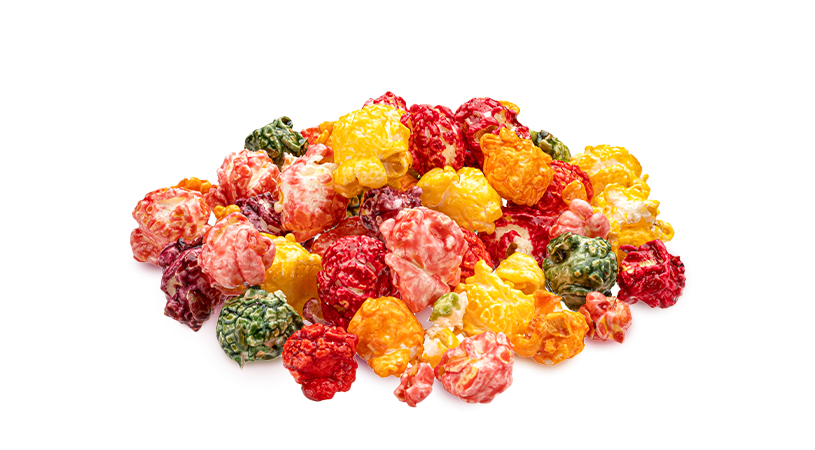
Typically, people can see colors before they taste the food, particularly when they are standing in crowded aisles of the store. Products can look more attractive without altering their flavor or texture with a bright and consistent appearance, which is why food coloring is still crucial for so many foods. Popcorn color powder is also a convenient option for manufacturers and snack makers to achieve an even golden color during the popcorn manufacturing process.
Bright Shades Begin
Yellow hues in food have a natural appeal as freshness, warmth and familiar tastes. Yellow food coloring is chosen by the manufacturer according to the desired appearance for customers after being processed. Depending on the formulation, ingredients like turmeric, annatto or beta carotene can give a natural yellow tint. The color powder is the most frequently used for popcorn hair color snacks, as a uniform golden color is desired.
More Than Appearance
Color ingredients can do more than just attract attention; they can also ensure consistency of products from batch to batch. When formulations are properly controlled, yellow food coloring provides a way for the manufacturers to obtain similar results during normal manufacture. Popcorn color powder also helps to make the popcorn of uniform color during popcorn making, which makes the finished product look attractive, whether in a pack or on the production line, regardless of the pack size or production lot.
Processing Needs Attention
Each manufacturing process generates unique conditions that affect the performance of the ingredients over time. The appearance of finished products can be influenced by heat, moisture, mixing methods and storage environments. Production teams typically test the food coloring for yellowness under the conditions that they will process in commercial production before the actual production. Similar testing is used to determine the performance of Popcorn color powder during the seasoning, coating, packaging and anticipated shelf life.
Choosing Suitable Ingredients
Selection of ingredients is a process of not only seeing but also knowing the combinations of quality, performance and production. When purchasing products, manufacturers will likely look at the technical specifications, formulation compatibility, certifications, and product supplier support. Yellow food coloring ensures the consistency of the product in repeated production cycles. Reliable Popcorn color powder also saves needless formulation changes and helps to produce snacks efficiently.
Practical Food Applications
While popcorn is a familiar use, there are countless other applications for yellow color ingredients, many of which are consumed daily. Yellow food coloring is used in bakery items, dairy products, beverages, confections, sauces, snacks and ready-to-eat foods that require warm colors. Because of its ability to color and add practical use during seasoning and coating procedures, popcorn color powder is still used by commercial popcorn manufacturers.
Supporting Better Results
Ingredients must function consistently in actual product manufacturing, not just in product development, to enable successful production. But manufacturers typically conduct production tests before using new ingredients in commercial products. In the final recipe, the food coloring is tested to make sure the recipe is correct before being produced in bulk. Color powder for popcorn is also tested to provide a consistent color appearance in subsequent production runs during normal production.
Conclusion
The design of food products that are visually attractive involves careful choice of ingredients, the formulation of the food and production testing to assure a consistent product. Foodrgb.com offers manufacturers solutions for food and snack applications with yellow food coloring and Popcorn color powder. Before commercial production, it is important to understand the processing conditions and assess the performance of the ingredients so as to ensure greater consistency and maintain product quality over time. For businesses creating new products, practical color solutions that will meet both technical and manufacturing requirements and goals should be considered.
