
When manufacturers begin searching for Food Color Suppliers, the first question is often about shade. That matters, but it is only part of the job. A supplier also needs to understand the formula, processing steps, storage conditions, and appearance expected at the end of shelf life. FoodRGB works with food, beverage, and nutraceutical applications and offers both standard and custom natural color systems. For a development team, that kind of technical fit can matter just as much as the color sample sitting on the bench during early trials.
Start With the Product Conditions
A useful supplier conversation begins with the recipe rather than a color chart. Developers should be ready to discuss pH, heat exposure, light, solubility, packaging, and whether the product is mostly water or fat. These details narrow the options quickly. A blue for a frozen drink may need different performance from a blue used in baked goods. Sharing real process information early also makes trials more meaningful, because the supplier can suggest a format that has a reasonable chance of working in the finished product.
Powder and Liquid Are Not Interchangeable
Natural colors can be supplied in several physical forms, and the format affects how they move through production. Powders can be practical for dry mixes, easy dosing, and storage, while liquids may fit processes where color is added directly to a wet phase. Some applications also benefit from oil-compatible systems. The best choice depends on equipment and formulation, not convenience alone. A developer who tests the correct format from the beginning is less likely to face poor dispersion or extra mixing work during commercial scale-up later on.
Why Gardenia Blue Deserves Attention
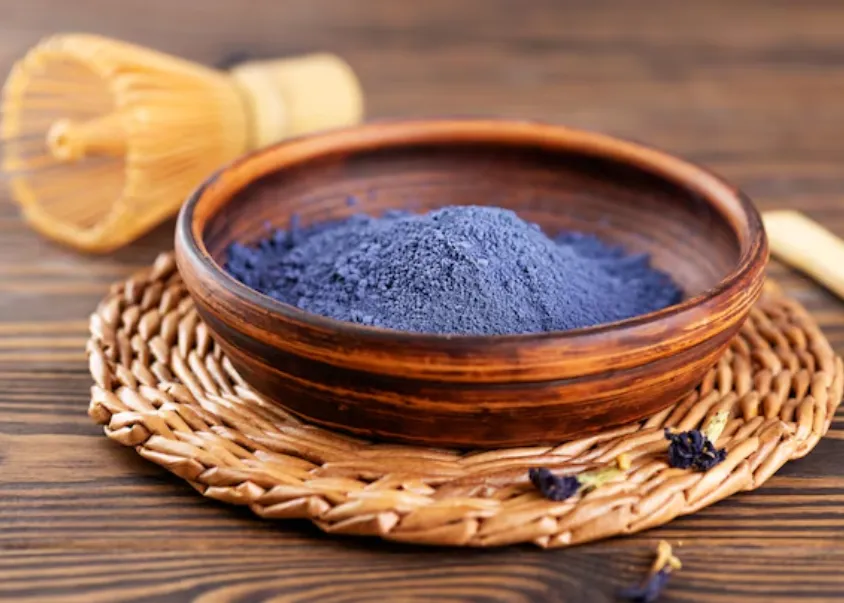
Natural blue shades are comparatively difficult to source, which makes Gardenia Blue an interesting option for product developers. FoodRGB describes its Gardenia Blue as a water-soluble color produced from gardenia-derived material and offers powder, liquid, oil-suspension, and custom formulations. The company lists frozen beverages, confectionery, ice cream, juices, smoothies, beverages, and baked goods among its applications. Its published information also highlights stable color tone across pH 4.0 to 10.0, with an acid-resistant option designed for lower-pH systems where precipitation can become a concern.
Blue Still Needs Real Product Testing
Even a technically suitable blue should be tested in the complete recipe. Proteins, fruit solids, minerals, flavors, sweeteners, and other ingredients can change how a shade looks once everything is mixed. Processing may change the result again. A blue that appears vivid in a clear solution might look softer in ice cream or a cloudy beverage. Bench work is most useful when it follows the actual recipe closely, including the planned concentration, mixing order, heating or cooling steps, and the final appearance expected after processing.
Ask About Scale Before You Need It
A color trial can succeed in a small beaker and still create questions on a production line. Larger mixers, longer holding times, different shear, and normal raw-material variation may all affect the result. Before approving a color, manufacturers should ask what support is available for pilot work and commercial scale-up. It is also worth discussing documentation, specifications, and consistency between lots. These practical points are easy to overlook during early development, yet they often decide whether a promising sample becomes a dependable ingredient in routine production.
Storage Can Change the Final Decision
The first day of testing should not be the last. Color needs to be checked under the conditions the finished product will actually face, including refrigeration, freezing, shelf storage, or exposure to retail lighting. Packaging belongs in the trial whenever possible because a clear bottle and an opaque carton create different environments. Looking at samples over time can reveal gradual fading, shifts in tone, or unexpected interaction with the formula. That evidence gives the development team a stronger basis for choosing between two otherwise similar options.
Conclusion
A reliable natural color supplier does more than send a shade sample. The better relationship connects the color to the recipe, process, packaging, and scale of production. Gardenia-derived blue shows why this matters because its useful formulation range still needs to suit the food or beverage being developed. Manufacturers exploring natural color systems can use foodrgb.com to review available options and technical support. Careful testing, clear process information and realistic shelf checks make it easier to choose a color that continues working beyond the laboratory.
